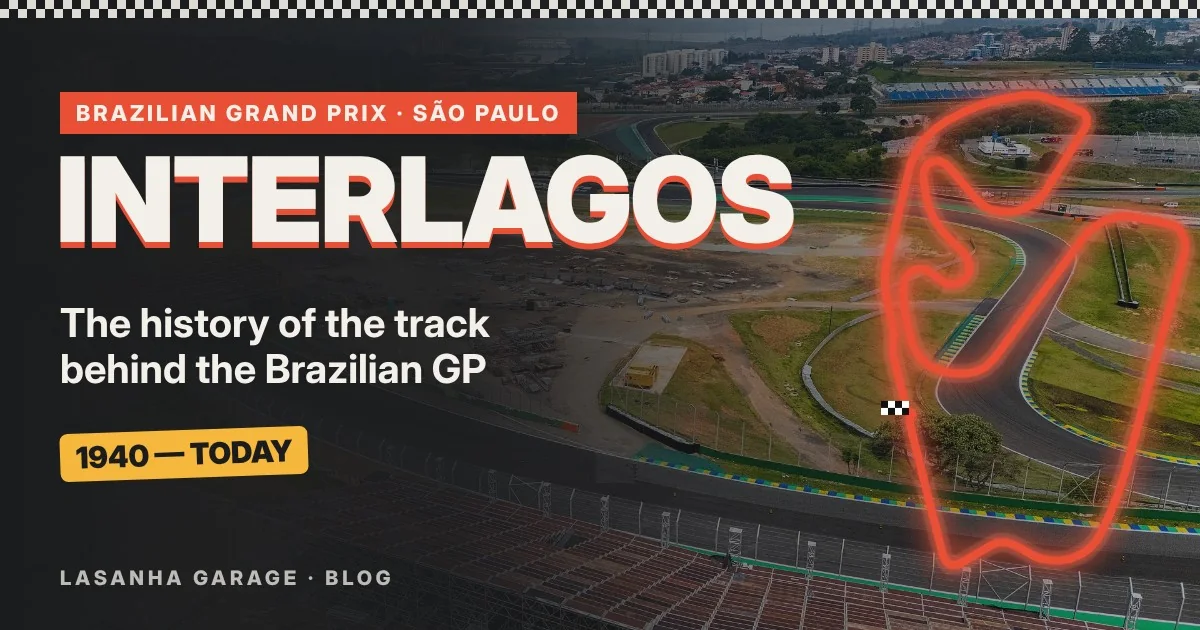
Interlagos sits in the south of São Paulo, Brazil's largest city, hemmed in by apartment blocks and two large reservoirs. It has hosted racing for more than eight decades, and since the 1970s it has been the most frequent home of the Formula One Brazilian Grand Prix. This is how a real estate project turned into one of the best-known circuits in the world.
A neighborhood between two lakes
In the mid-1920s, engineer Louis Romero Sanson planned a resort neighborhood south of the city, between the Guarapiranga and Billings reservoirs. Urban planner Alfred Agache, who worked on the project, saw a resemblance to Interlaken, the Swiss town that sits between two lakes. That is where the name comes from: Interlagos is Portuguese for "between lakes." The plan even included an artificial beach, with sand brought up from the coast at Santos (City of São Paulo).
The 1929 crash and a 1932 armed uprising in São Paulo stalled the project. By the time it picked up again, motor racing was booming, and Sanson decided the neighborhood needed a racetrack. The layout, drawn up with the Automóvel Clube do Brasil, took inspiration from tracks such as Indianapolis and Brooklands.
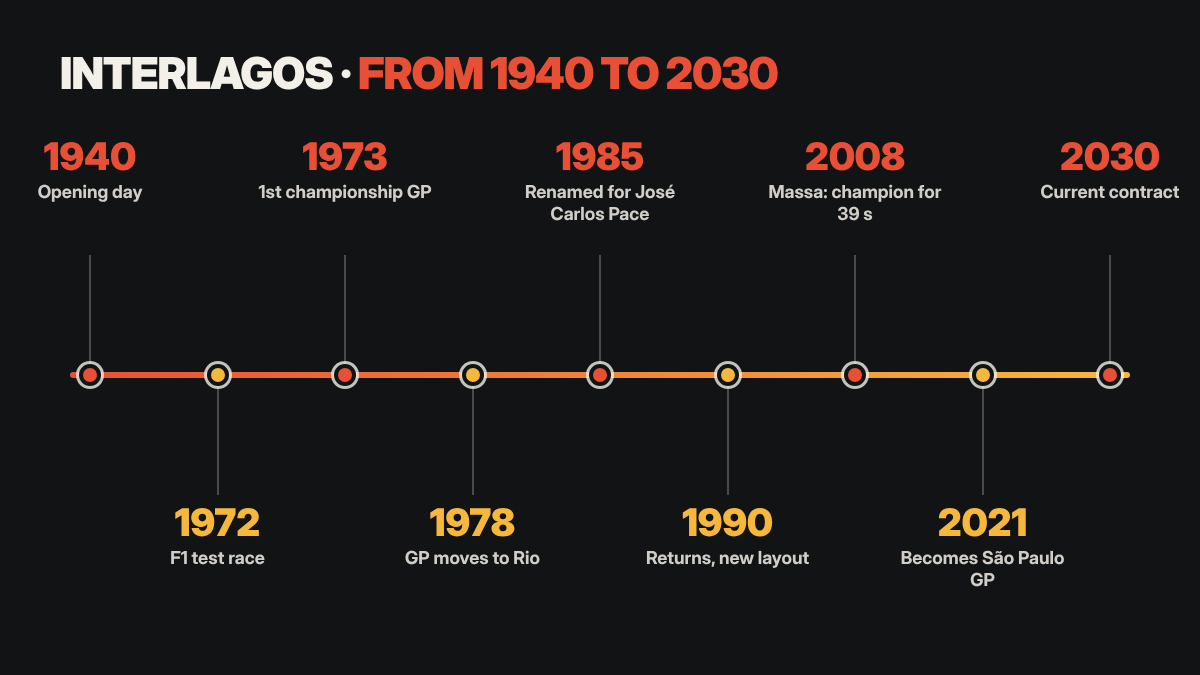
Drivers ran the first laps in April 1939, while construction was still under way. After two postponements, the circuit opened on May 12, 1940. The main race that day, the São Paulo Grand Prix, ran 25 laps and 200 km, about 124 miles (City of São Paulo).
The giant original layout
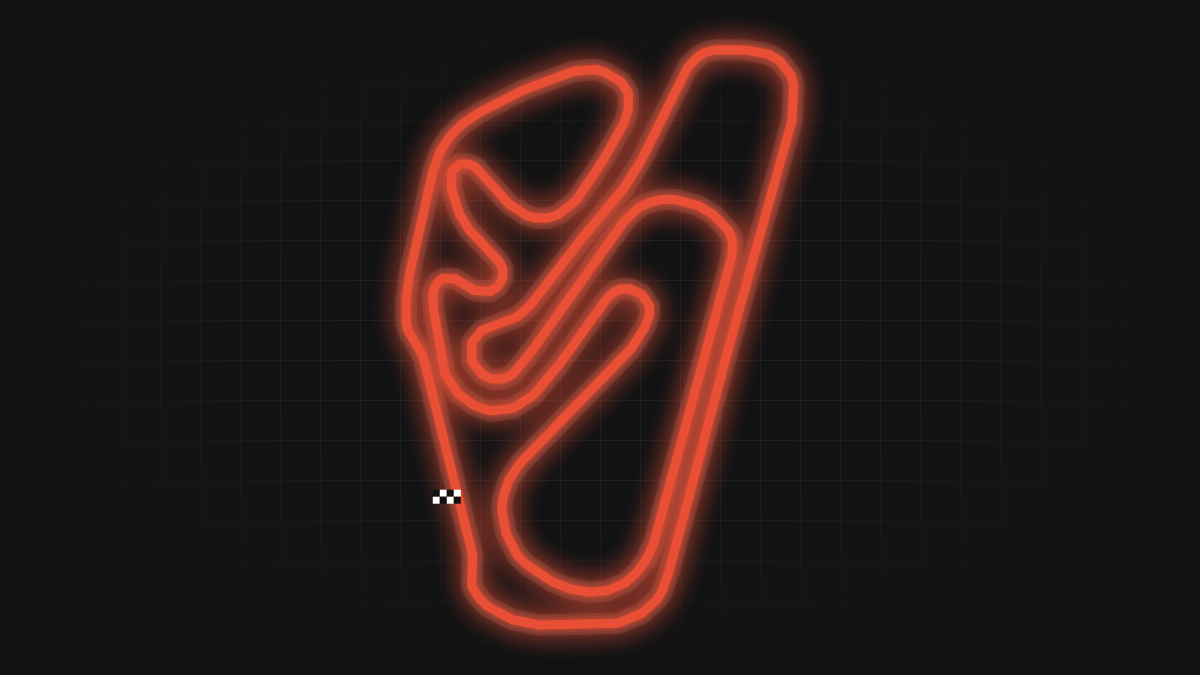
The first Interlagos measured about 8 km (roughly 5 miles): a fast outer ring of 3,250 meters wrapped around a twisty infield. The surface was bumpy, and that would count against the track decades later (City of São Paulo; Wikipedia).
Formula One arrived first as a test. In 1972, Interlagos hosted a non-championship race won by Argentina's Carlos Reutemann in a Brabham. The event showed that the circuit could host a full Grand Prix (Wikipedia).
Brazil's decade
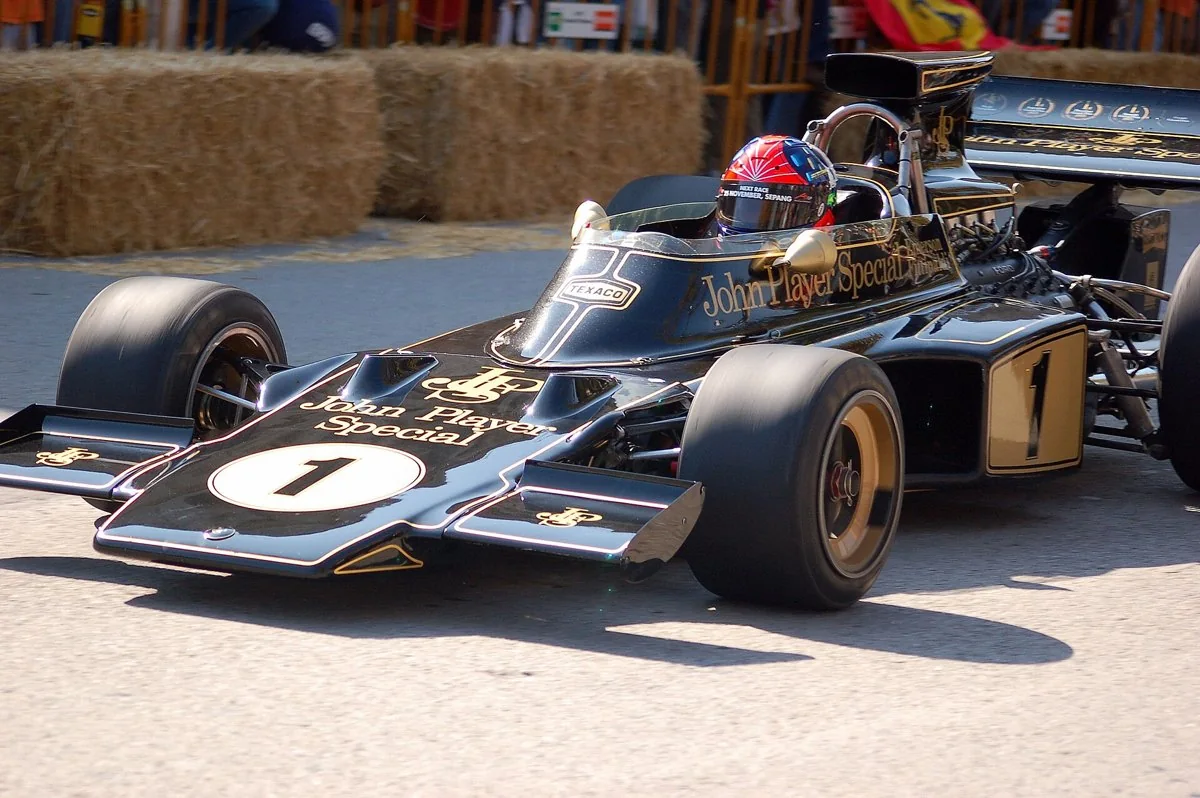
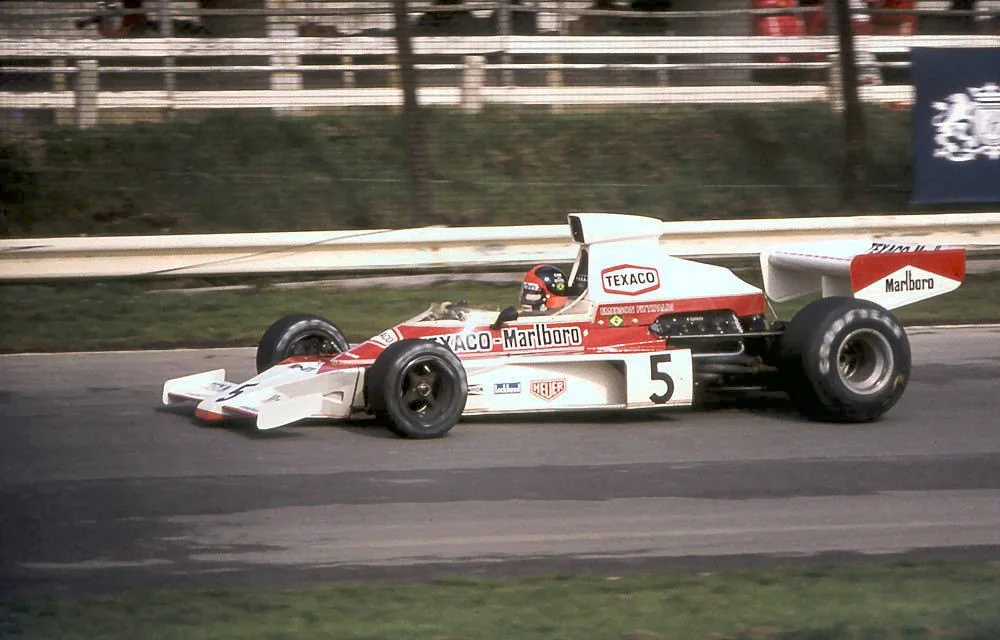
In 1973, the Brazilian Grand Prix counted for the world championship for the first time, and the winner was local hero Emerson Fittipaldi, driving for Lotus. He won again the following year, now with McLaren and from pole position. The 1974 race was stopped after 32 of its scheduled 40 laps, when heavy rain flooded the track (Wikipedia).
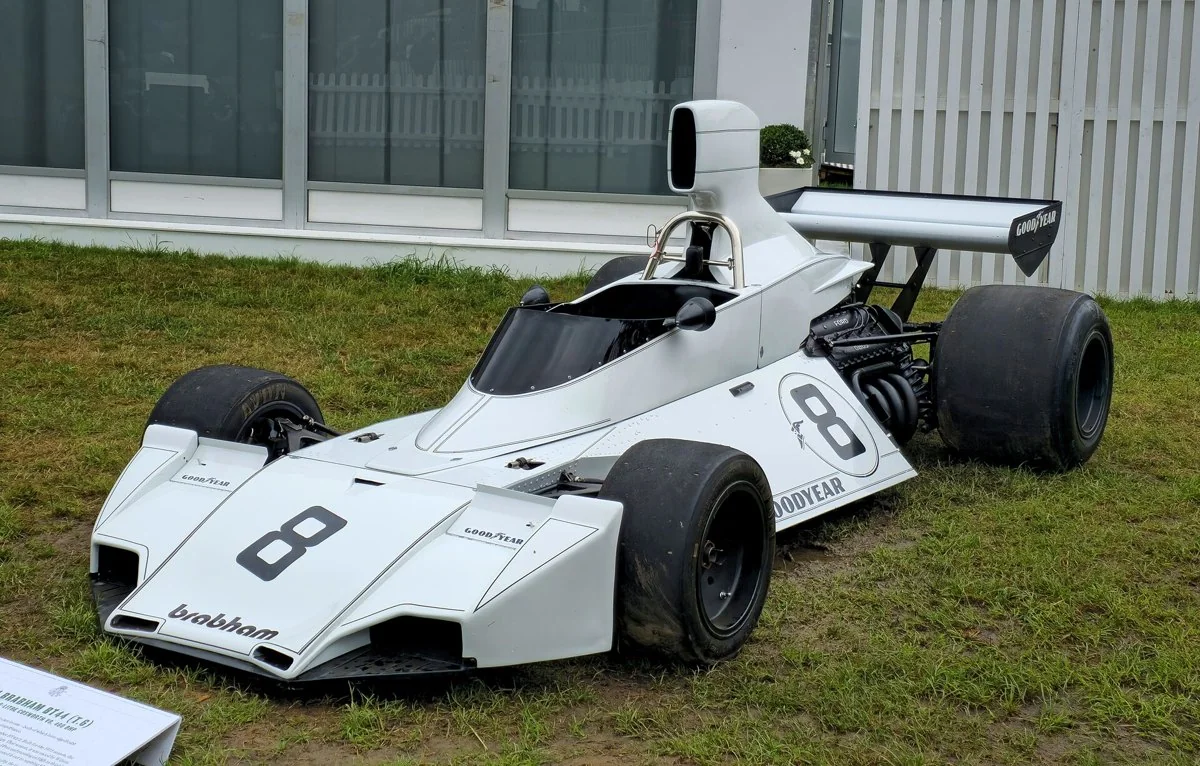
In 1975 it was the turn of José Carlos Pace, a São Paulo native, who won at home in a Brabham BT44B. Fittipaldi finished second, 5.79 seconds behind, giving Brazil its first one-two finish in Formula One (Wikipedia). It was Pace's only Grand Prix win. He died in 1977, and in 1985 the circuit was renamed Autódromo José Carlos Pace, although most fans still simply call it Interlagos (City of São Paulo).
Exile in Rio, then a comeback
The rough surface and safety complaints sent the Grand Prix to Jacarepaguá, in Rio de Janeiro, in 1978 and again from 1981 to 1989. In Rio, Frenchman Alain Prost won five times and earned the nickname "King of Rio" (Wikipedia).
Ayrton Senna's success helped bring the race back to São Paulo. Interlagos was rebuilt, with new garages and a new control tower, and the layout was cut to 4.325 km. The Grand Prix returned in March 1990, and the winner was, of all people, Prost, then driving for Ferrari. It was his sixth Brazilian Grand Prix win, still the record, and the home crowd was not pleased (City of São Paulo; Wikipedia).
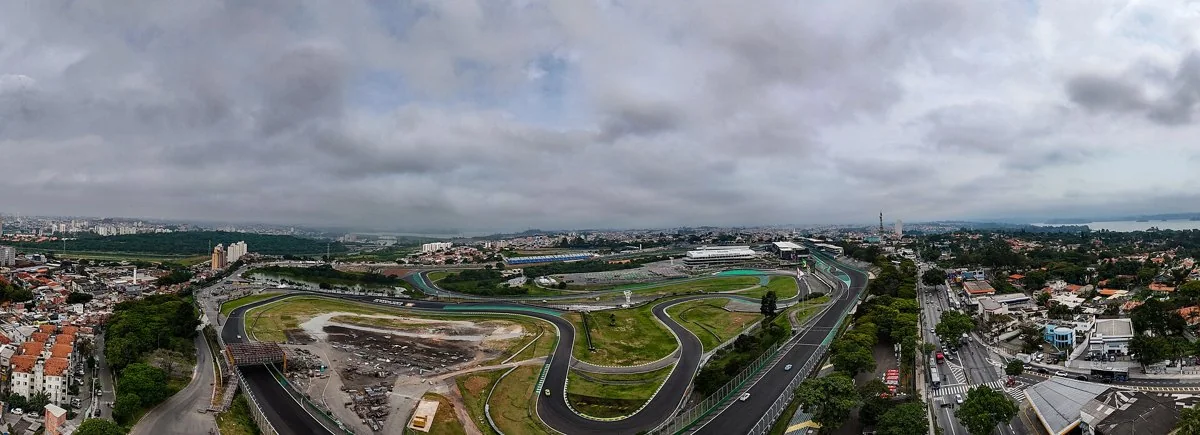
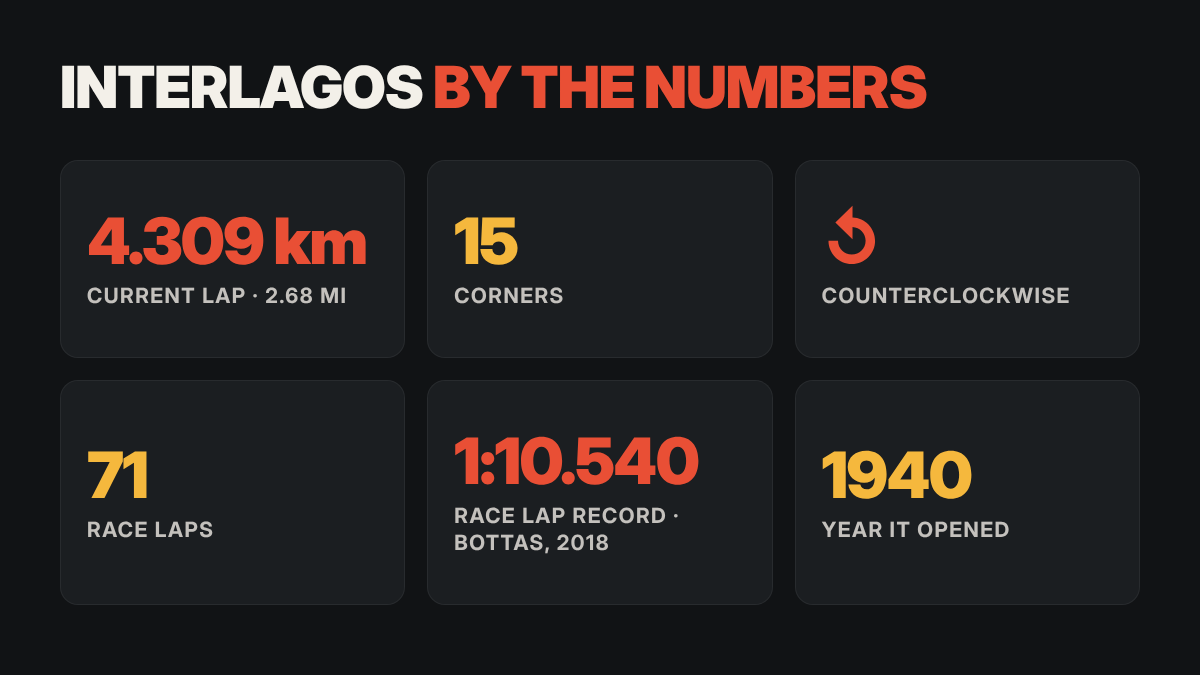
The current 4.309 km layout (about 2.68 miles) has been used since 2000 and runs counterclockwise, which is unusual outside oval racing. Right after the start comes the Senna S, followed by Curva do Sol, the Reta Oposta back straight and the Descida do Lago. The lap ends with the Junção corner and the long uphill run known as Subida dos Boxes (Wikipedia). There are 15 corners, and the race lap record belongs to Valtteri Bottas, who set 1:10.540 in a Mercedes in 2018 (Wikipedia). The 2026 Grand Prix runs 71 laps, a total of 305.879 km, about 190 miles (The Rio Times).

Senna, at last
Senna was already a world champion, but he had never won at home. In 1991 he was leading in his McLaren when the gearbox started to fail. From lap 64 the car was stuck in sixth gear, and he still held on to the lead until the checkered flag (Itatiaia).
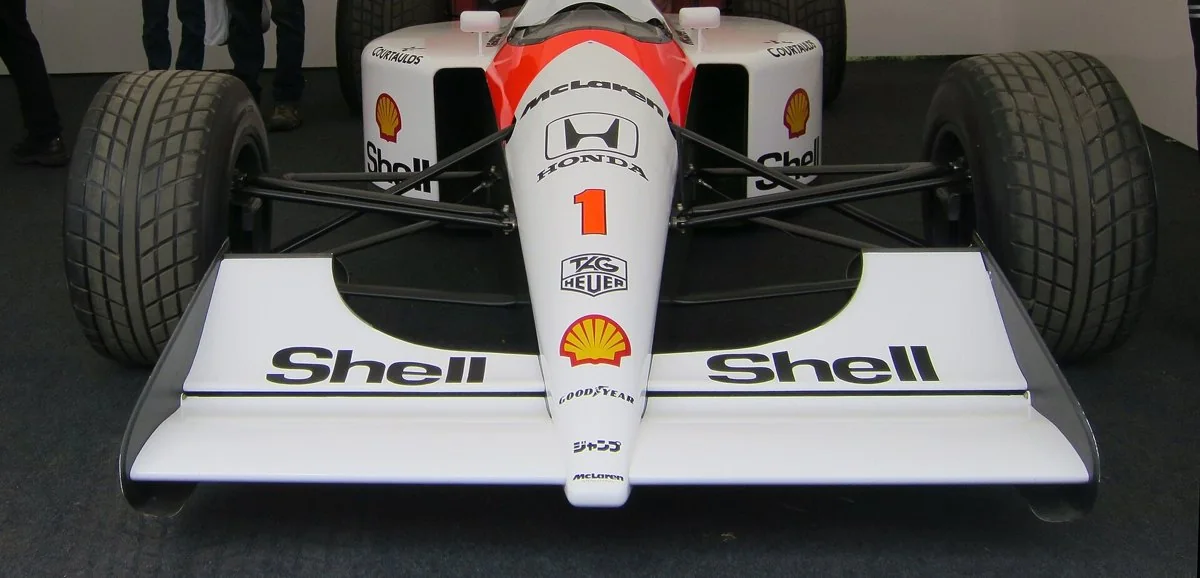
Two years later, in 1993, he won again in a race turned upside down by a brief, torrential downpour. After the finish, fans poured onto the track to celebrate with him (Wikipedia). Those were his only two home wins.
Massa and a 13-year wait
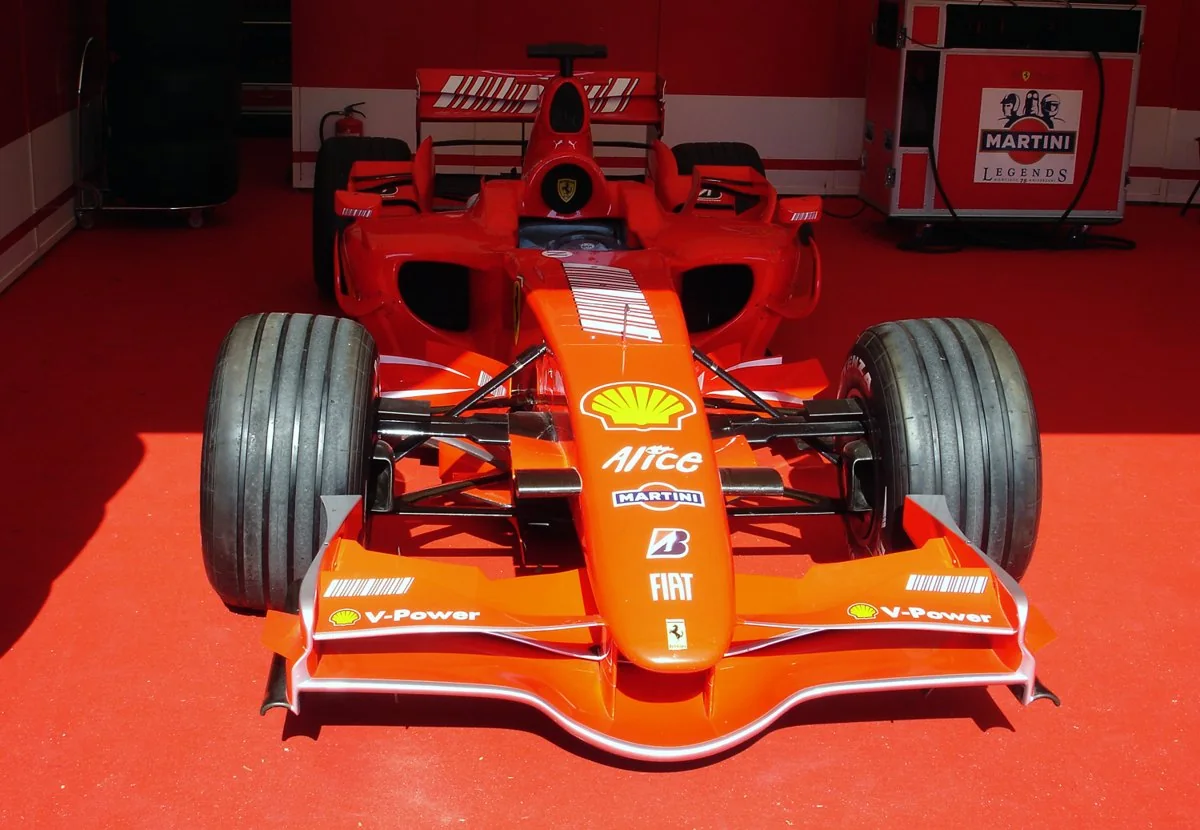
Brazil returned to the top step at Interlagos in 2006 with Felipe Massa, another São Paulo native. He took pole and won for Ferrari, becoming the first Brazilian to win in São Paulo since Senna in 1993. The same day, Michael Schumacher drove his last race for Ferrari before retiring: a puncture dropped him to 19th, and he fought back to fourth. Fernando Alonso finished second and clinched his second title (Wikipedia).
Where titles are decided
From the mid-2000s, with the race at the end of the season, Interlagos became a title decider. Alonso clinched the 2005 championship there. In 2007, Kimi Räikkönen won the race and the title by a single point. In 2009, Jenson Button finished fifth and sealed his only championship. In 2012, Sebastian Vettel spun on the first lap after contact, recovered to sixth and beat Alonso to the title by three points, in a race won by Button (Wikipedia; GrandPrix.com).
None of them, though, was as dramatic as 2008.
2008: champion for 39 seconds
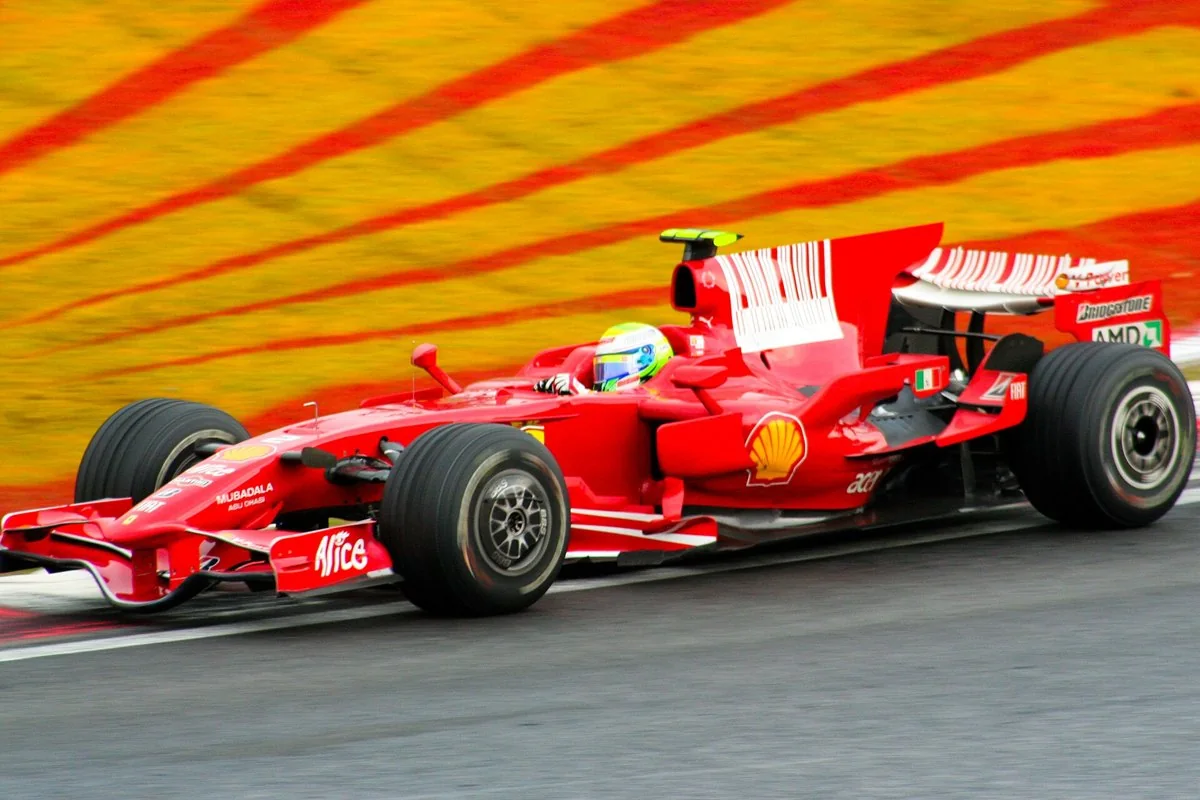
Lewis Hamilton arrived at the final round with 94 points, seven more than Massa. If Massa won, Hamilton needed to finish fifth or better. Massa took pole and led. Light rain began on lap 63 and got heavier on lap 69, when Hamilton ran wide and was passed by Vettel, dropping to sixth (Wikipedia).
Massa took the checkered flag as the winner, and for about 39 seconds he was world champion. But Toyota's Timo Glock had stayed out on dry-weather tires. At Junção, the last corner of the last lap, Hamilton passed Glock, finished fifth and won the title by one point, 98 to 97 (RacingNews365). Massa cried on the podium, and the way he handled the defeat earned him respect around the world.
Rain and a new era
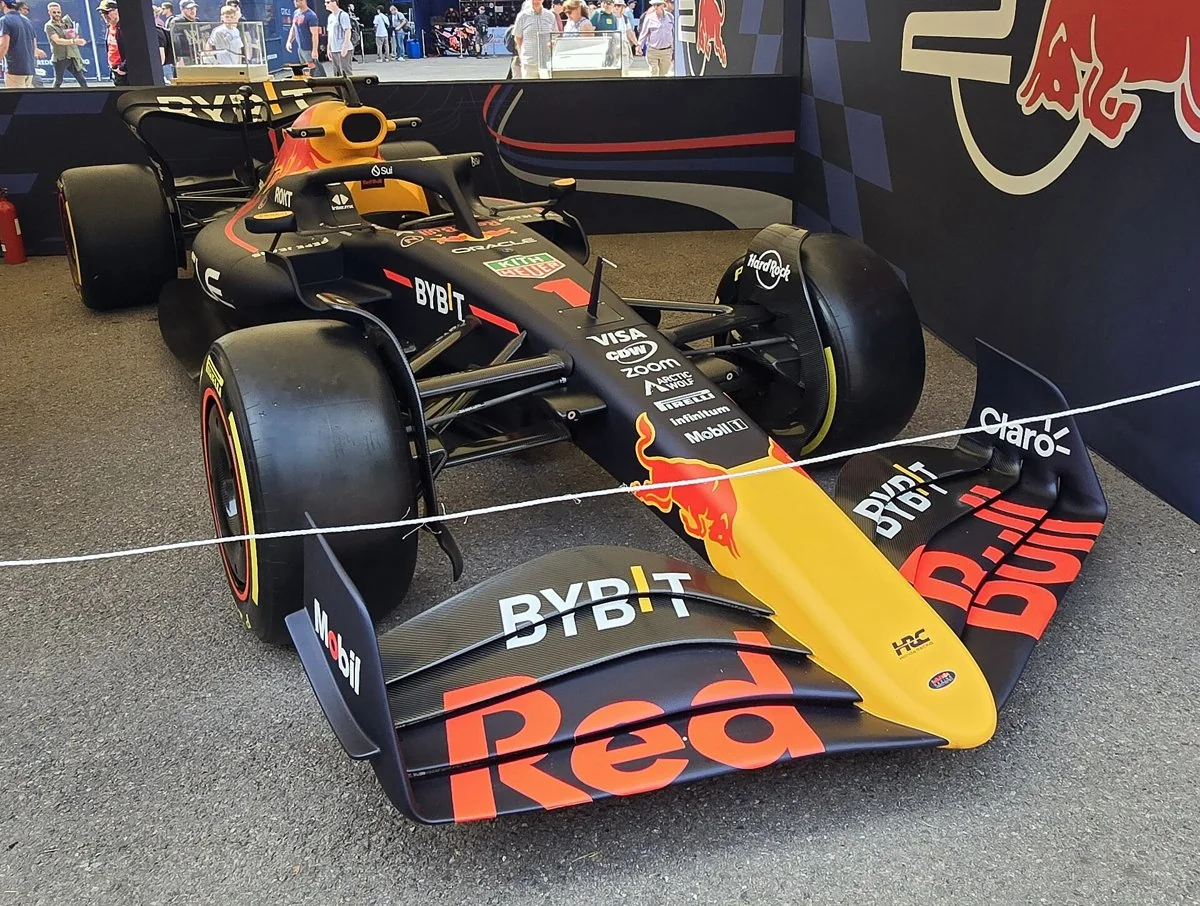
In 2016, in a chaotic wet race won by Hamilton, a teenage Max Verstappen climbed from 16th to third in 15 laps. In 2021, the event was renamed the São Paulo Grand Prix. That year, Hamilton was excluded from qualifying, started the sprint from the back and won on Sunday. In 2024, Verstappen started 17th in the rain and won by 19 seconds, with both Alpines completing the podium (Wikipedia).
The current contract keeps Formula One at Interlagos until 2030 (Wikipedia). More than 80 years after it opened, the track between two lakes is still one of the most unpredictable stops on the calendar.
Sources
- City of São Paulo: history of the Interlagos racetrack (Portuguese)
- Wikipedia: Interlagos Circuit
- Wikipedia: Brazilian Grand Prix
- Wikipedia: 1974 Brazilian Grand Prix
- Wikipedia: 1975 Brazilian Grand Prix
- Wikipedia: 1993 Brazilian Grand Prix
- Wikipedia: 2006 Brazilian Grand Prix
- Wikipedia: 2008 Brazilian Grand Prix
- Itatiaia: Senna's first win in Brazil (Portuguese)
- GrandPrix.com: 2012 Brazilian GP race notes
- The Rio Times: 2026 São Paulo Grand Prix guide
- RacingNews365: Massa, champion for 39 seconds